How to Make Your Dog a Service Dog: The Honest, Legal Answer
You do not make a service dog by registering it, buying a vest, or getting a certificate. You make one through training. Here is what that actually takes, and why owner training is legal.
The question almost everyone asks first
"How do I make my dog a service dog?" usually gets answered by the loudest websites, and most of them lie. They will sell you a $50 listing in a "national registry," ship you a vest with a patch, and email a certificate with an official-looking seal. Then they imply you are done. You are not done. You have spent money on items that change nothing about your dog's legal status.
Here is the honest version. Under the Americans with Disabilities Act, a service animal is a dog individually trained to do work or perform tasks for a person with a disability. That is the whole legal test. The Department of Justice is explicit that businesses may not require proof of certification, training, or registration as a condition of entry. So a registry listing, an ID card, and a vest are all things you can own, but they are not what makes the dog a service dog. The training does. For the deeper definition, see what is a service dog.
What actually makes a service dog
Real service dog work is built in layers, and you cannot skip to the top. Each layer takes weeks or months, and most owner-trained teams measure the full process in many months to a couple of years.
1. A suitable temperament
Not every dog can do this job, and pushing an unsuitable dog into it is unfair to the dog. A service dog candidate should be:
- Calm and stable, not easily startled or overstimulated.
- Focused on the handler, able to tune out other people and dogs.
- Not reactive, meaning no barking, lunging, or fearfulness toward strangers, noises, or other animals.
- Resilient, able to recover quickly from a surprise rather than shutting down or escalating.
A dog that loves everyone a little too much, or guards and growls, is telling you something. Honest assessment here saves you a year of frustration later.
2. Foundation obedience
Before any specialized work, the dog needs reliable basics under real-world distraction: sit, down, stay, recall, loose-leash walking, and an instant "leave it." Reliable means the dog responds the first time in a busy parking lot, not just in your quiet kitchen.
3. Public-access manners
This is the layer most pet dogs never reach, and it is what separates a service dog from a well-loved companion. In public the dog must:
- Settle quietly under a table or chair for long stretches without fussing.
- Ignore distractions: dropped food, other dogs, children, carts, and people who want to say hello.
- Be fully house-trained, with no accidents indoors.
- Stay under control, quiet, and unobtrusive at all times.
A business can legally remove any service dog that is out of control or not house-trained, no matter how well it does its tasks. So this layer is not optional.
4. Disability-specific task training
Finally, the part that legally defines the team: at least one trained task that helps with your specific disability. A task is a deliberate action the dog performs on cue or in response to a condition. Examples include retrieving medication, interrupting a panic episode, providing balance support, alerting to a blood sugar change, or guiding. Emotional comfort from the dog's mere presence does not count as a task, which is the line between a service dog and an emotional support animal. We list concrete examples in our guide to service dog tasks.
Yes, you can train the dog yourself
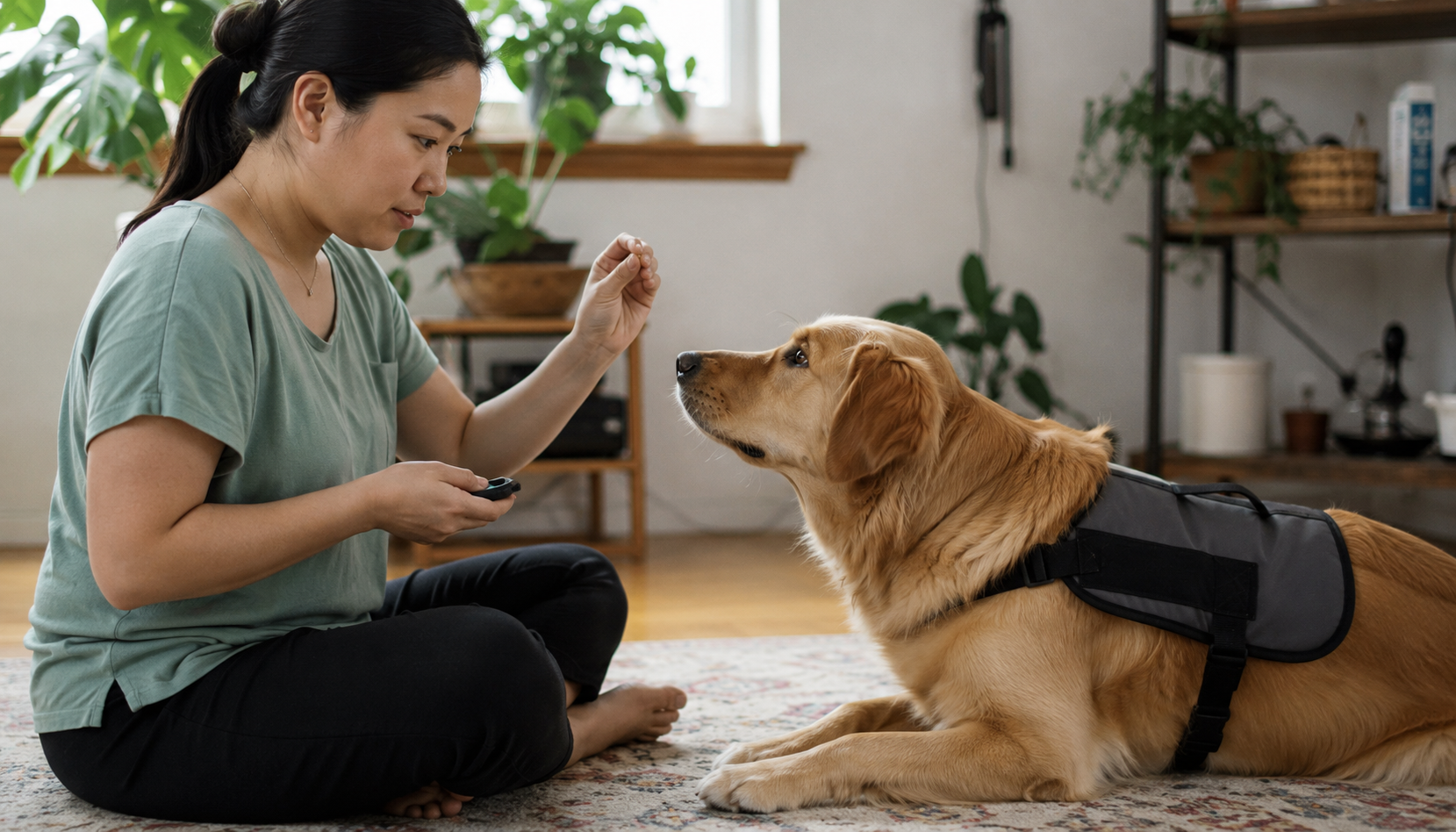
The ADA does not require a program, a professional trainer, or a graduation certificate. Owner training is completely legal, and an owner-trained dog has exactly the same legal standing as a dog from a $40,000 program. What matters is the result: a dog that is task-trained and behaves in public. One of our contributors trained her own mobility dog over many months with no paperwork at all. If you go this route, be ruthless about the standards above, and bring in a professional trainer if any layer stalls.
Why the "$50 and you're done" sites are misleading
Search results are flooded with sites selling instant registration and certification. The DOJ has said plainly that those documents do not convey any rights under the ADA and that it does not recognize them as proof that a dog is a service animal. Watch for these tells:
- It claims registration is "required by law" or "ADA mandated." It is not, ever.
- It promises a certificate that guarantees access to stores, housing, or flights. No document can do that.
- It will register any animal, sight unseen, with no questions about training.
- It uses government-style seals and implies a link to the ADA or DOJ. The ADA is a law, not an agency, and we are not affiliated with the government, the DOJ, or the ADA.
For the full breakdown, read do service dogs have to be registered. The short answer is no.
So where does an ID card fit?
Honestly, it does not make your dog a service dog, and you never need one. Once your dog is genuinely task-trained and solid in public, some handlers find that a wallet card with the dog's photo and the two questions a business may ask ends a doorway conversation in seconds instead of minutes. That is the only thing it does: reduce friction. It is a voluntary convenience, not a license and not proof of anything. If, after your dog has truly earned the title through training, that convenience appeals to you, you can see what we offer on our plans page. If it does not, your rights are exactly the same. Both of those things are true, and you deserve a company that says so.
Written and reviewed by the ADA Service Dog Team
VerifiedADA Service Dog is operated by NS Design ID Cards, the team behind assistancedogregistry.co.uk and esasupport.co.uk, supporting assistance dog handlers since 2020 with over 20,000 ID cards shipped. Our guidance is grounded in the Americans with Disabilities Act and current Department of Justice, DOT, and HUD guidance. Registration is voluntary, and we always say so honestly.
Important
This article is general orientation, not legal advice. For your specific situation, contact the ADA Information Line at 1-800-514-0301 or a disability rights attorney. ADA Service Dog Registry is a voluntary handler identification platform, not affiliated with the ADA, DOJ, or any US government agency.
Keep reading
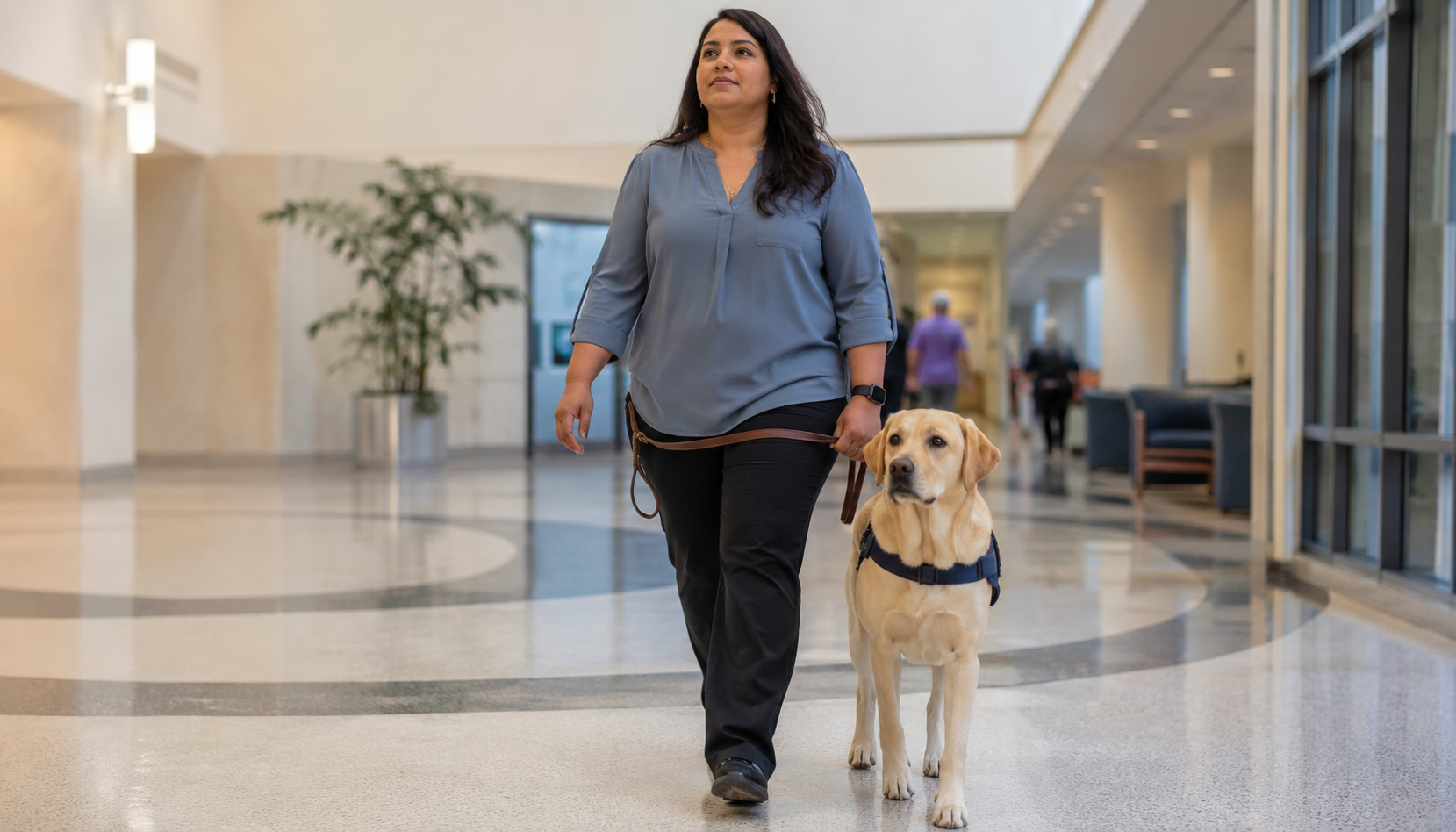
Service Dog Requirements in 2026: What the ADA Actually Requires
The ADA has one real service dog requirement: a handler with a disability and a dog trained to do a task. No c...
Read →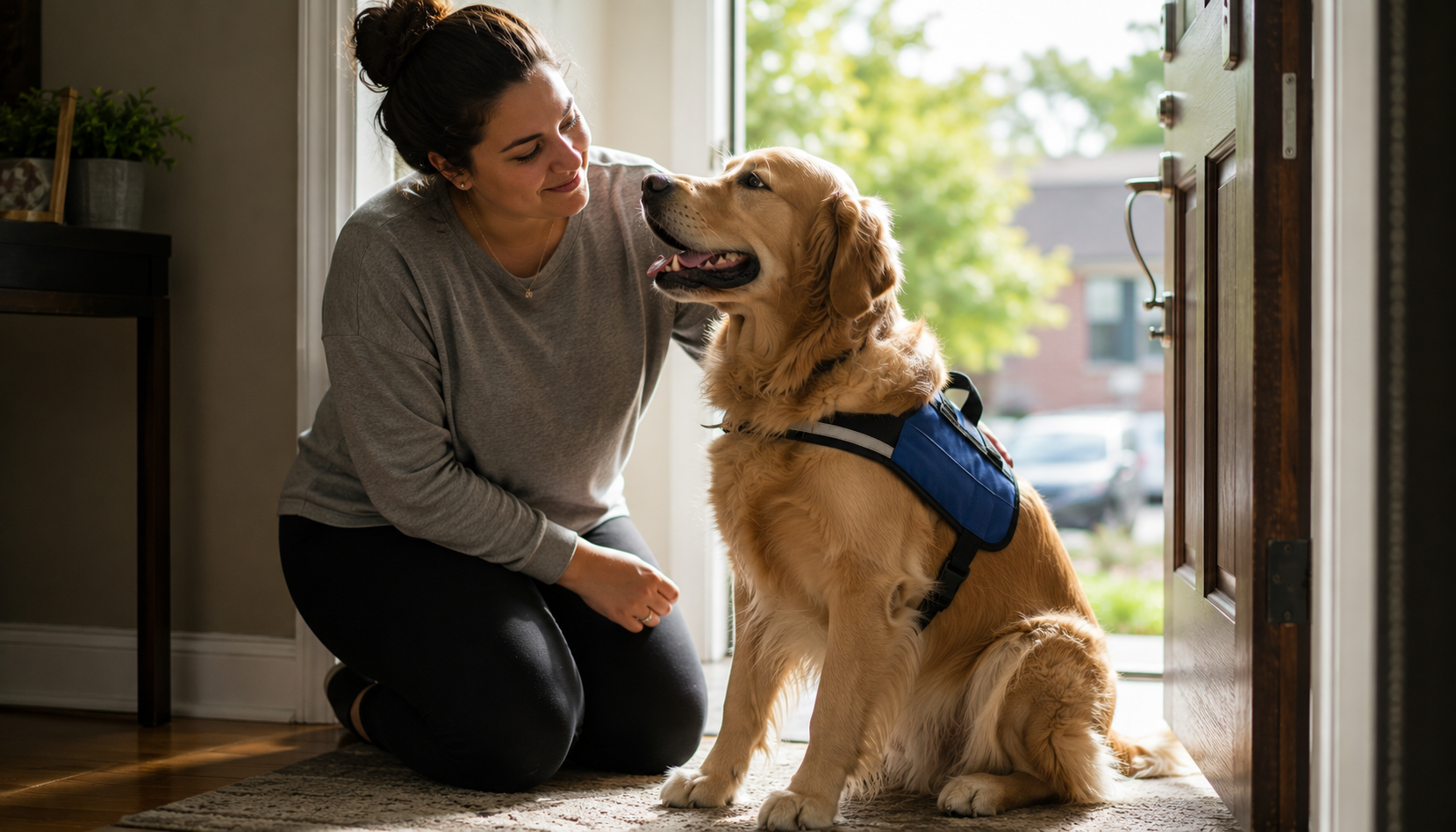
What Is a Service Dog? The ADA Definition in Plain English
A service dog is a dog individually trained to do work or tasks for a person with a disability. Training makes...
Read →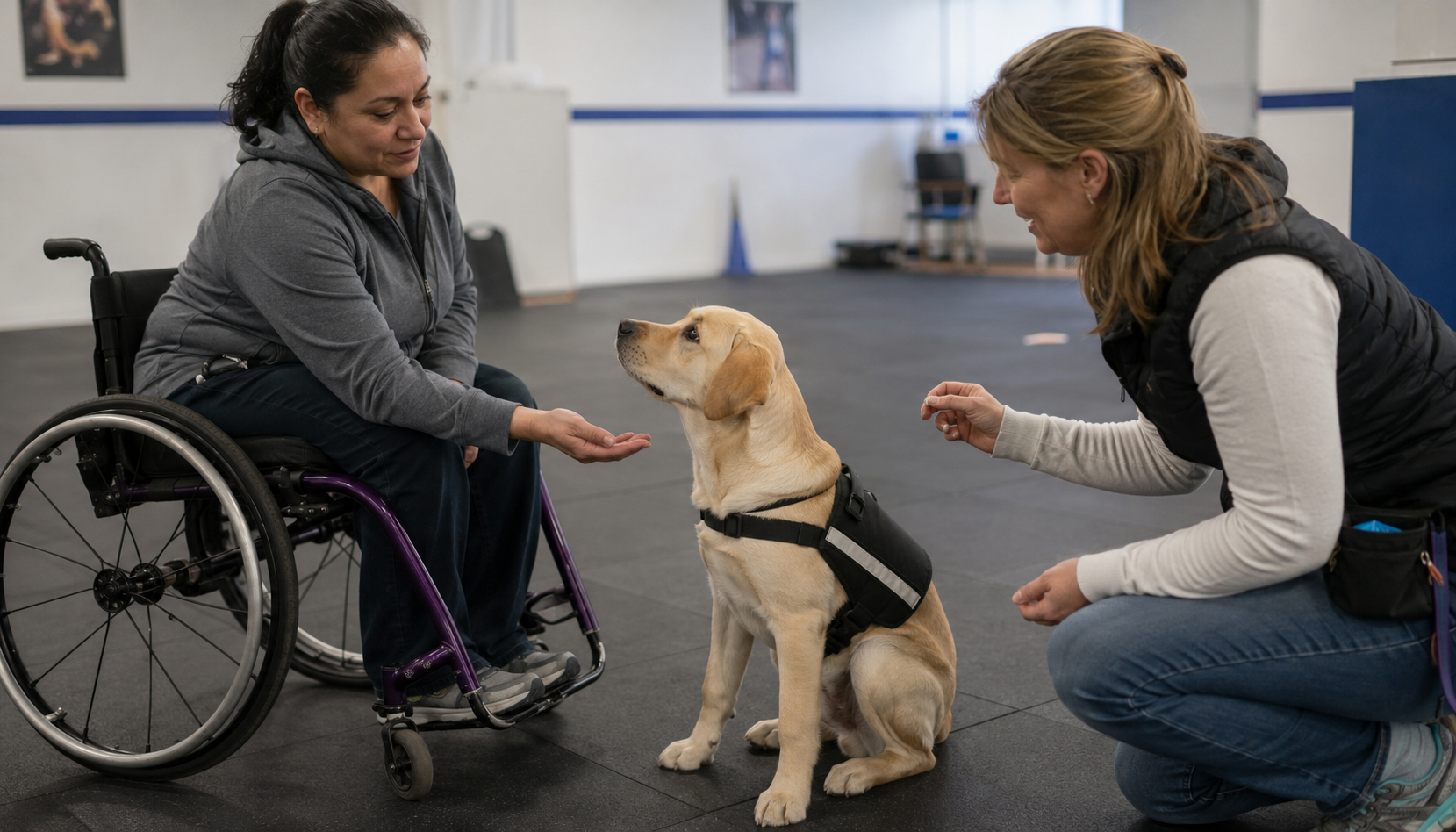
How to Get a Service Dog: The Real Paths and What Each Involves
Four honest ways to get a service dog: an accredited program, a hired trainer, owner-training, or choosing the...
Read →Get the card. Skip the explanations.
Digital handler ID + AI ADA Coach + state-specific rules from $4.99/mo. 30-day money-back guarantee on lifetime plans.
See plans →